

Table of Contents
What I Learned Leading CSR Through the Shift From Spending to Proving Impact
Why Mumbai Leads India’s CSR Story
Mumbai is where India’s CSR money lands. That is not a guess. The numbers say so.
Indian companies spent a record ₹40,794 crore on CSR in FY 2024–25. That is a 17 percent rise. Maharashtra received the highest investment of any state. Education led all sectors with ₹13,877 crore. Ninety-eight percent of funds went straight to social projects. Only two percent went to government funds.
Those figures put Mumbai teams in a spotlight. Everyone asks where the money goes. Everyone asks what it changed.
That second question is the one I keep returning to. CSR leaders must now prove impact, not just report spending. This is my playbook for Mumbai-based CSR teams.
CSR – Why Mumbai Carries Extra Weight
Money follows headquarters. Sattva Consulting’s latest report shows how far. Bihar’s poverty index is nearly five times that of Maharashtra. Yet Maharashtra receives nearly 19 times more CSR funding per capita. Between FY 2021–22 and FY 2024–25, Maharashtra gained an extra ₹3,381.9 crore while Bihar gained ₹292.5 crore.
This is not criticism. It is a responsibility. When you sit in Mumbai, you manage money that many people watch. Boards ask sharper questions, partners expect more and communities remember every promise.
Spending keeps growing too. CSR has risen at 15 percent a year over the past decade. More money brings more scrutiny. That is simply how it works.
Looking Beyond the Mumbai City
The same report raises a fair question. Is funding reaching the places that need it most? The five states with the highest multidimensional poverty receive just ₹94 per capita in CSR funding. The five lowest-need states receive ₹455.
Mumbai teams can help close this gap. Many companies headquartered here run projects across India. Gujarat recorded the fastest growth in FY 2024–25, at 68 percent. That shows money moves when companies decide it should.
For a Delhi comparison, read CSR Strategy in Delhi 2027: What Top Corporates Do.
Ask one question at the planning stage. Does this project reach people who are easy to reach, or people who truly need it? Both can be valid. But choose on purpose.
The Actual CSR Challenge: From Spending to Proving
The CSR law came into force in April 2014. It asks eligible companies to invest two percent of net profit in social projects. For years, success meant one thing. Did you spend the budget? That test is gone.
Today the question is different. Did the project work? Can you show it?
This shift is the real challenge for CSR teams. It changes how you plan. It changes how you pick partners. It changes how you speak to your board. Four lessons have shaped my thinking.
But before that you must also read my article on – How to Turn CSR into Impact.
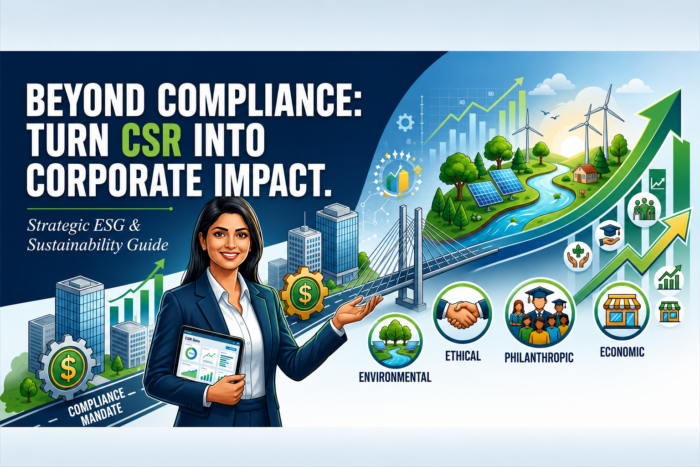
Lesson One: Know the Rules Before the Board Asks
Rules shape CSR more than most people admit. Two matter most.
First, impact assessment. It is mandatory for businesses with a CSR budget of ₹10 crore or more. It applies to projects with an outlay of ₹1 crore or more. An independent agency must carry it out. The project must have finished at least a year earlier. Companies must then report it in the annual report, with an executive summary and web links.
Second, unspent money. Funds left from an ongoing project must move to a special account within 30 days of the financial year end. Companies must use them within three financial years. A defaulting company can face a penalty. It is the lesser of ₹1 crore or twice the amount not transferred. Read here on – New CSR Act amendments: Updates and all you need to know
Two more details matter. A company with any amount in its unspent account must form a CSR Committee. And impact assessment costs can count as CSR spending. The cap is two percent of total CSR expenditure or ₹50 lakh, whichever is higher. Budget for it early.
My advice is simple. Put these dates on one shared calendar. Review it every quarter. Never wait until audit season arrives.
Lesson Two: Plan Measurement on Day One
Do not ask “did it work?” at the end. Ask it at the start.
Write the success measure before the project begins. Record the baseline. Agree with your partner on what data they will share. Agree on how often they will share it.
A project is easier to defend when everyone agreed on the numbers early. It also makes later assessments far less painful.
Keep measures few and clear. Three good indicators beat thirty weak ones. Pick numbers a village worker, a manager and a board member can all understand. If people cannot explain the measure, they will not trust it.
Lesson Three: Choose Partners Like Critical Vendors
Your partner carries your name into the field. Treat that seriously.
Implementing organisations must now register through Form CSR-1. That is the minimum, not the finish line. Ask for audited accounts. Ask about past field work. Visit the site yourself.
Then keep visiting. A monthly call beats a yearly report. Small problems are cheap to fix early. They become expensive when ignored.
Write expectations into the agreement. Cover reporting dates, data formats and how changes get approved.
Lesson Four: Report to the Board in Plain Words
Boards are busy people. Give them one page.
Say what you spent. Say what changed. Say what comes next. Show the numbers first. Then add one real story from the field. Skip the jargon. Clear reporting builds trust faster than long presentations. End every update with one clear request. Ask for a decision, a connection, or more time. Reports that ask for something get read.
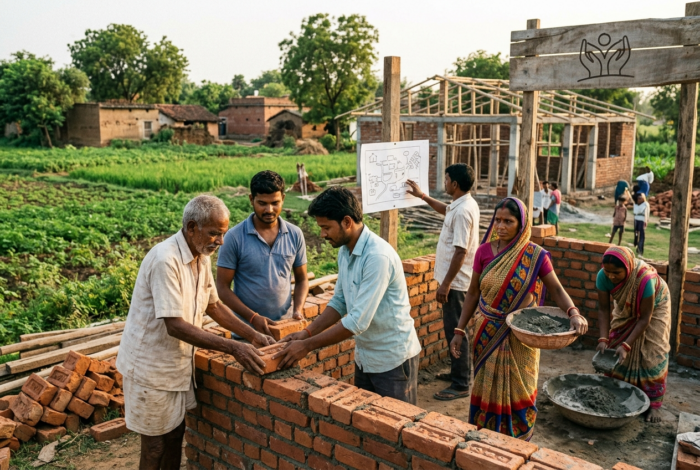
A Quick Checklist for Mumbai, Maharashtra CSR Teams
Keep one calendar for every legal deadline. Set success measures before launch. Record a baseline for every project. Check each partner’s registration and accounts. Visit project sites on a schedule. Send the board a one-page update every quarter.
You can also read my full breakdown is in CSR Impact Assessment India 2026: Threshold & MCA Rules.
My Closing Thoughts
Maharashtra receives the most CSR money in India. That means Mumbai teams also owe the most proofs. And proof comes from clean rules, clear data and honest partners. Teams that build these habits will earn lasting trust from boards, communities and regulators alike.
If you lead CSR in Maharashtra and want to discuss notes, I would love to hear from you.
Dr. Lopamudra Priyadarshini | drlopapriyadarshini.com
